

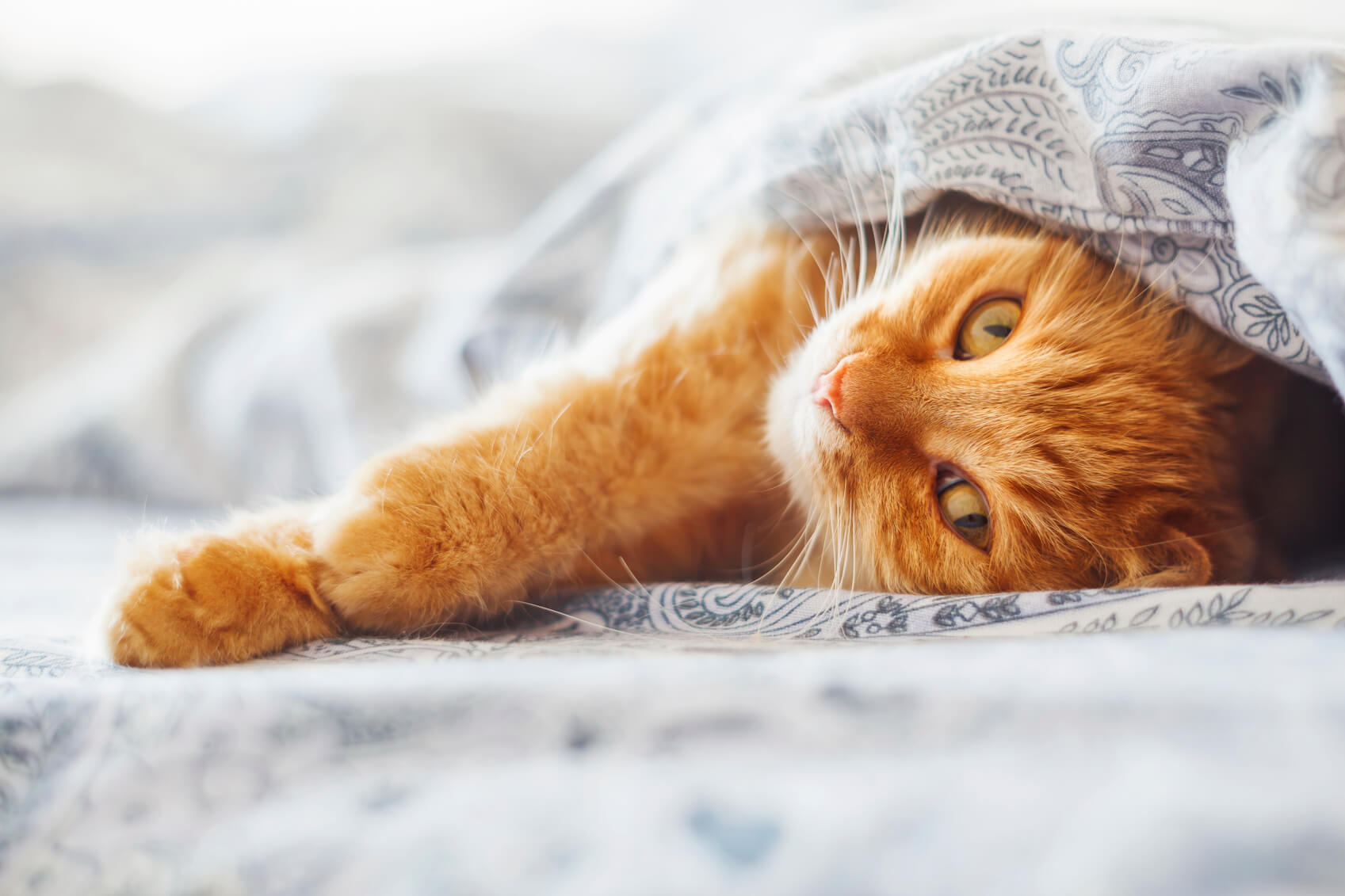
What Are Cats’ Sleeping Habits?
While some cats are more active than others at night, it’s completely normal because cats are naturally nocturnal animals, meaning they prefer to sleep during the day and hunt at night.
Just because your kitty is domesticated and has easy access to food, doesn't mean the sleep pattern will shift as soon as you bring them home. Their instincts for nighttime activity may take over.
It takes time to gradually change their schedule and shift playtime away from late at night, or for you to learn how to live with the behavior of your nocturnal kitty.
How to Change Your Cat’s Sleeping Habits
Work with your cat to re-schedule their instincts by keeping them active in the daytime. If you’re consistent with your cat's new routine, they can adjust to a more desirable schedule quicker.
Try Shifting Playtime to Daytime
- Play with your cat in the evening before bedtime or throughout the day.
- If you see your cat sleeping during the day, gently wake them up and encourage play.
- Use interactive toys to entice curiosity and wakefulness during the day, especially when you are not home to play with them.
- Allow your cat to safely explore the outdoors during the day to stimulate their brain.
- Try to ignore the nighttime behaviors. Giving a response will provide your cat the engagement they are looking for, and they will want to play more.
Keeping the Bedroom Quiet
Changing the behavior may be your first route of action, but living with your cat requires some compromise. The playtime shift might take time and patience, so you may need to change some of your habits, too.
- Set the tone that the bedroom is a no-play zone and keep all toys out of the room.
- Of course, cats can decide that rolled up socks and paper scraps are fun too, so put away other potential “toys” as well.
- Keep the bedroom door closed while you sleep.
- Use a fan or a sound machine to drown out outside noises if you’re a light sleeper.
- Designate an area or room away from the bedroom as the play space so you won't hear as much commotion.
Because night activity is a natural instinct in cats, it can take time for certain felines to adjust even while others quickly change their habits.
Be patient with your cat, and you will both be much happier in the long run.
